The short answer
Three things get mixed up: the restaurant fortune cookie (the one you know), the Japanese tsujiura senbei, its ancestor, and omikuji, which are not cookies but paper fortunes from shrines. All three share one idea, receiving a message by chance, but each has its own origin and way of being used. There are also modern variants with different flavors, sizes and recipes.
Quick comparison
| Type | Where | What it is | Where the message goes |
|---|---|---|---|
| Fortune cookie | Restaurants in the US and worldwide | Sweet cookie, folded while hot | Inside |
| Tsujiura senbei | Kyoto and Kanazawa (Japan) | Larger, darker cracker, eaten with tea | In the fold, outside |
| Omikuji | Shrines and temples in Japan | Paper fortune, not edible | The paper itself |
The classic fortune cookie
This is the one from Chinese restaurants in the West. According to Wikipedia, it is made with flour, sugar, vanilla and oil, and handmade ones were baked as discs about three inches wide and folded while hot. The slip goes inside, and modern slips usually add lucky numbers and a Chinese word. It started in California in the early twentieth century, as our fortune cookie history explains, and it is almost unknown in China: Wikipedia notes that a US company stopped selling them there because they were seen as "too American".
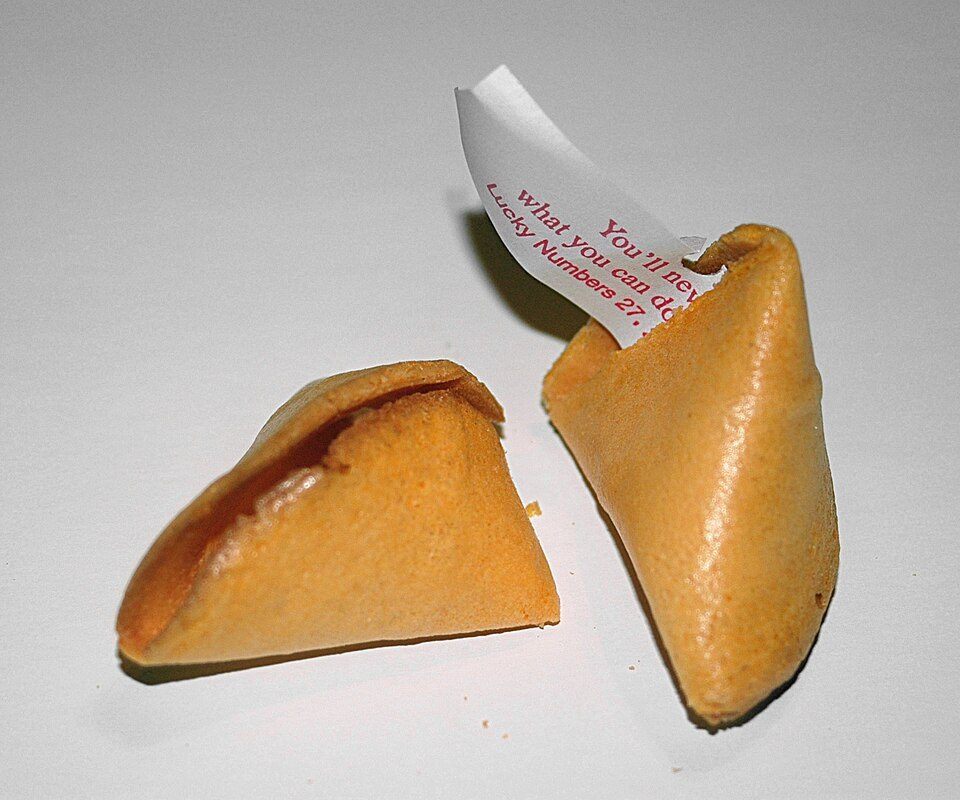

The tsujiura senbei, its Japanese ancestor
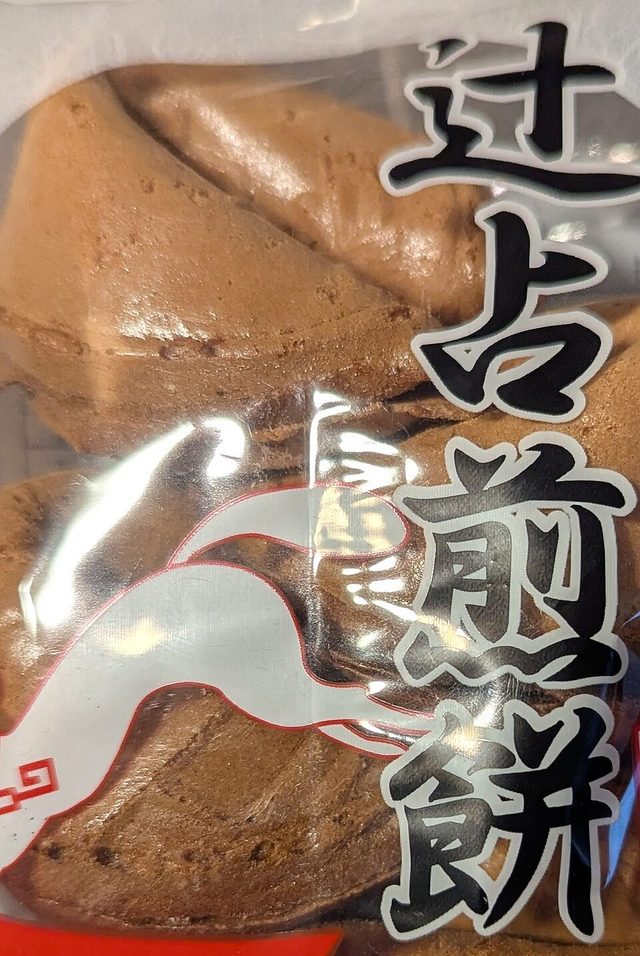
Japan has had a cracker that looks like the restaurant cookie for generations, but it is not the same:
- Larger and darker. According to Wikipedia, the dough has sesame and miso. Other descriptions differ on recipe details and on the specific shop, so treat this as a general reference, not a fixed recipe.
- The message goes outside. The slip is tucked into the fold instead of sitting inside.
- No lucky numbers. And it was eaten with tea.
- Still on sale in some regions, mainly in Kanazawa and near the Fushimi Inari shrine in Kyoto.
- Until around World War II they were known in English as fortune tea cakes, according to the same source.

The omikuji: luck on a slip of paper
Omikuji are fortunes written on strips of paper that you get at Shinto shrines and Buddhist temples. You make a small offering and draw one at random from a box. Today they are also sold in red vending machines, according to the Encyclopedia of Shinto. The name means "sacred lot".
The paper tells you how much luck you have and also gives advice on specific topics: love, work and studies, health, travel, lost items, moving house or engagements. The ranking, from best to worst, is usually:
- 大吉 dai-kichi: great blessing.
- 吉 kichi: blessing.
- 小吉 shō-kichi: small blessing.
- 末吉 sue-kichi: future blessing.
- 凶 kyō: bad luck.
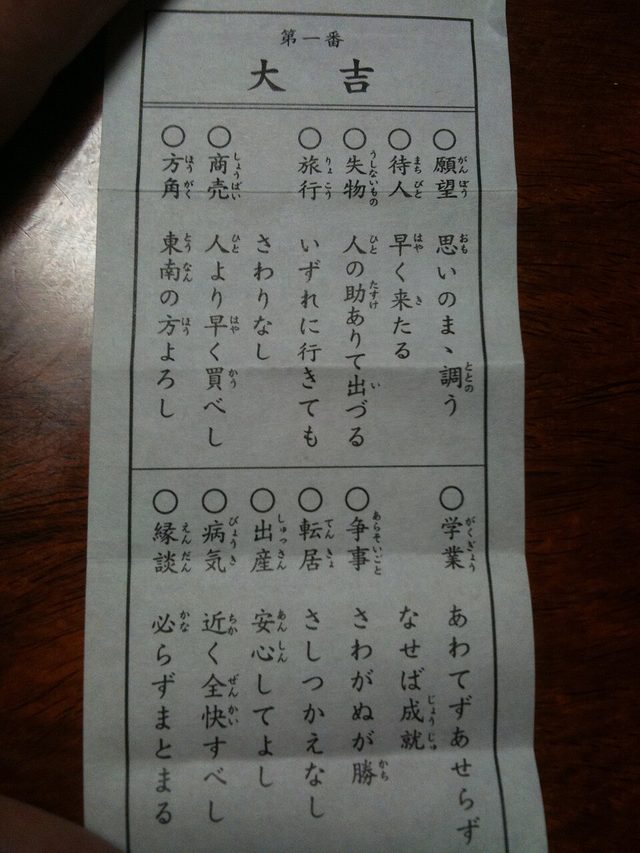

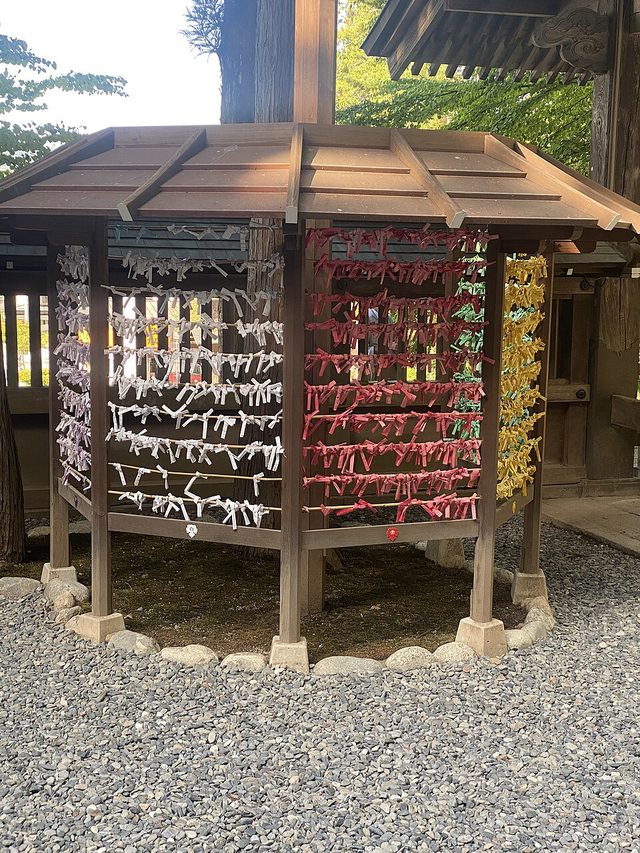
The exact order varies by shrine: the Encyclopedia of Shinto lists five levels, with chūkichi between dai-kichi and kichi, and Wikipedia adds other intermediate ones. If you draw bad luck, the usual custom is to fold the paper and tie it to a pine tree or a wire wall on the grounds. One traditional explanation is a pun: matsu means both "pine" and "to wait", so the bad luck stays waiting by the tree instead of following you.

The tradition has Chinese roots: the hundred-verse system used by many temples is attributed to the monk Ryōgen (912–985) and is considered inspired by a Chinese oracle. That is why omikuji are a relative of the cookie, not its direct origin.
Modern variants
The restaurant cookie has been adapted to each place and occasion:
- Local adaptations. Wikipedia mentions, for example, cookies with messages in English and French in Canada, or the "Lucky Taco", a red Mexican version shaped like a taco.
- Flavors and coatings. Specialty shops sell vanilla cookies, chocolate cookies and cookies dipped in chocolate.
- Gluten-free. Versions made with gluten-free flours exist. Always check the label: certification depends on the manufacturer.
- Vegan. They are not vegan by default: the classic recipe uses egg whites, as in our homemade recipe. If you want a vegan one, check the ingredient list.
- Custom. For weddings or companies you can order them with your own message. See the ideas in custom fortune cookies.
About commercial variants. The flavor and gluten-free details come from retailer product pages, not an independent source, so we give no brands or figures.
Which one to choose?
- For a dinner or party: the classic. Everyone recognizes it and it fits the game of opening it at the table (see the New Year's Eve ideas).
- For Japan fans: the tsujiura senbei, if you travel to Kyoto or Kanazawa.
- For a more ritual experience: an omikuji at a shrine, with its ranking and advice.
- To try one now: open a virtual cookie with its slip and numbers.
Sources
- Fortune cookie. Wikipedia.
- O-mikuji. Wikipedia.
- Omikuji. Encyclopedia of Shinto, Kokugakuin University.
Questions about types of fortune cookies
What is the difference between a fortune cookie and an omikuji?
The cookie is a sweet with a slip inside and it started in California. The omikuji is a paper fortune drawn from a box at a shrine or temple in Japan, and it is not eaten.
What is tsujiura senbei?
A Japanese cracker, larger and darker than the restaurant cookie, with the slip in the fold. It is still sold in Kanazawa and near the Fushimi Inari shrine in Kyoto, and it is considered the ancestor of the fortune cookie.
Are there vegan or gluten-free fortune cookies?
Gluten-free ones do exist. Vegan ones are harder to find, because the classic recipe uses egg white. In both cases, check the manufacturer's label.
What does "dai-kichi" mean?
"Great blessing": the best result on an omikuji. At the other end is "kyō", bad luck.